 ComputeSphere
From repo to running in one push
Connect a repo or start from a template — we build, deploy, and route it with SSL.
Everything you need to ship
Docs, an API, and a CLI — wired to the same platform your services run on.
6 Common Mistakes to Avoid in Stakeholder Management

Effective stakeholder management is crucial for project success. Stakeholders, both internal and external, influence project outcomes. Internal stakeholders include team members and executives, while external ones are clients, suppliers, and regulatory bodies. Understanding and managing these relationships is key to avoiding common mistakes.
Here are six common mistakes in stakeholder management, along with practical advice to help you manage stakeholders effectively. Resolving these issues will ensure smoother project execution for you.
Who is a Stakeholder?
A stakeholder is anyone likely to be impacted by a project. Stakeholders can be broadly classified into "Internal Stakeholders" and "External Stakeholders."
Internal stakeholders are within your organization. They include the project sponsor, project owner, project team, and anyone who provides input for the project or benefits from its outcome. This group also consists of those who may be negatively impacted, such as employees needing to reskill due to automation or those who might be moved out.
External stakeholders are outside your organization. They include vendors, customers, shareholders, government entities, auditors, and others affected by the project.
What is Stakeholder Management?
The process of stakeholder management involves identifying, analyzing, and involving people who are interested in the project's outcome. These stakeholders can be internal, such as team members and executives, or external, like customers, suppliers, and regulatory agencies. Understanding their roles, interests, and levels of influence is essential for managing project complexities and ensuring the project's success.
Common Mistakes to Avoid in Stakeholder Management
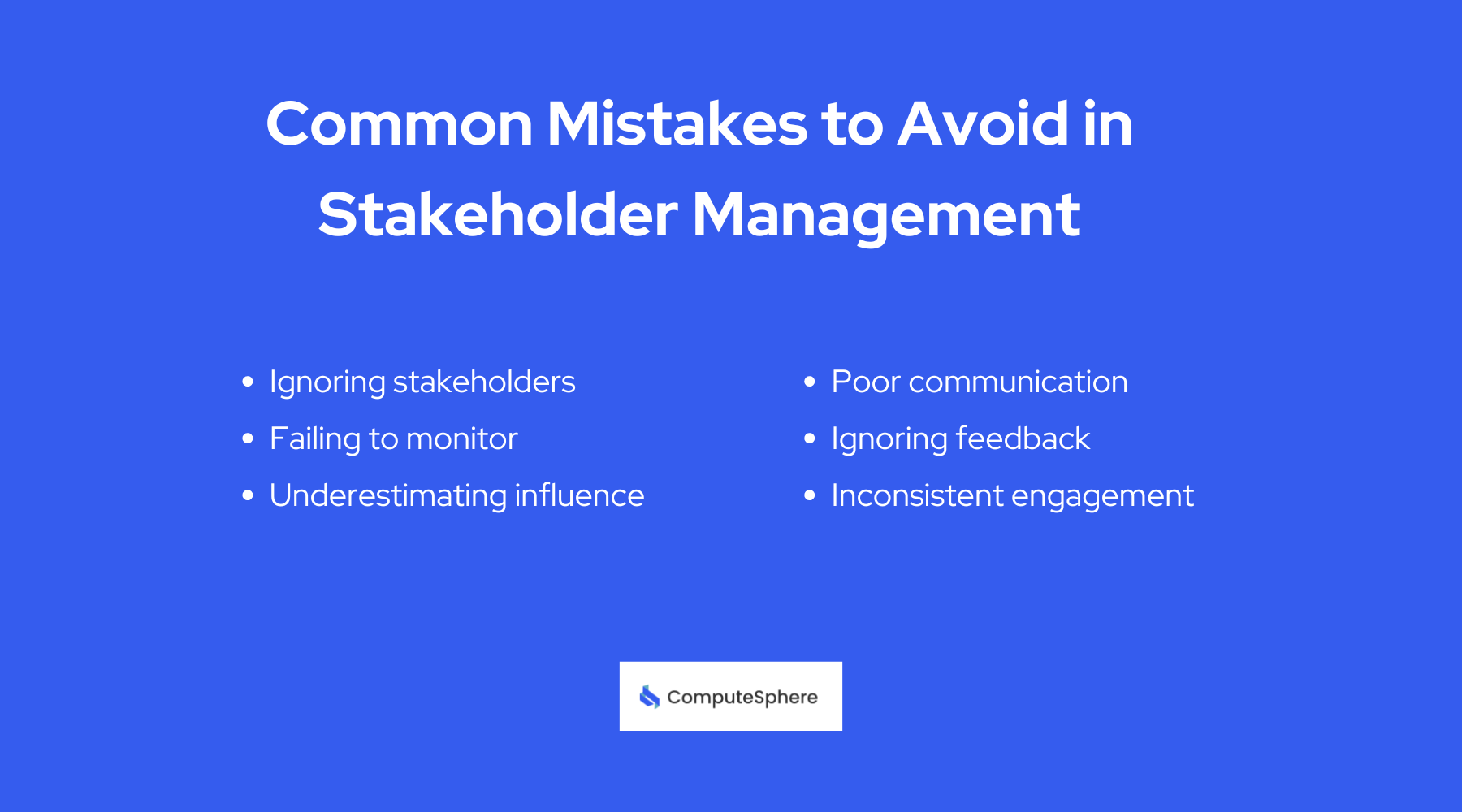
Ignoring Stakeholders
One common mistake in stakeholder management is ignoring key stakeholders. Missing out on identifying all relevant parties can lead to missed opportunities and issues. Stakeholders include anyone affected by the project or who can influence it, both internal (team members, executives) and external (clients, suppliers, regulatory bodies). To avoid this, thoroughly identify stakeholders using brainstorming, stakeholder maps, and matrices to ensure no one is overlooked.
Failing to monitor
Failing to monitor and adjust stakeholder management strategies can cause projects to fall out of sync with stakeholder needs. Regularly check the effectiveness of your engagement and gather feedback to understand satisfaction and identify areas for improvement. Adjust strategies as needed to solve emerging issues or changing needs. Continuously review the engagement process to keep it aligned with project goals.
Underestimating stakeholder influence
Underestimating stakeholder influence can lead to significant project challenges. Recognize and manage each stakeholder's unique level of influence and interest. Focus on stakeholders who are critical to your success using tools such as the power-interest matrix Involve key stakeholders in decision-making to ensure their support and minimize conflicts.
Poor Communication
Poor communication is a major issue in stakeholder management. Insufficient or unclear communication can lead to misunderstandings, reduce trust, and block engagement. To avoid this, create a personalized communication plan that specifies how and when to communicate with each stakeholder group. Ensure transparent, effective information sharing with regular updates and feedback loops that align with stakeholders' preferences.
Ignoring Feedback
Ignoring feedback can cause project misalignment and dissatisfaction. Stakeholder feedback is invaluable for understanding their needs, expectations, and concerns. Actively seek feedback throughout the project using surveys, feedback forms, and direct conversations. Analyze and implement necessary changes to align the project with stakeholder expectations.
Underestimating stakeholder influence
Underestimating stakeholder influence can lead to significant project challenges. Recognize and manage each stakeholder's unique level of influence and interest. Use tools like the power-interest grid to classify stakeholders and focus on those critical to success. Involve key stakeholders in decision-making to ensure their support and minimize conflicts.
Inconsistent engagement
Inconsistent engagement with stakeholders can lead to a lack of support and involvement. Irregular contact can make stakeholders feel neglected and disengaged. To avoid this, maintain regular engagement through scheduled check-ins, meetings, and updates. Use methods like workshops, feedback sessions, and collaborative platforms to keep stakeholders actively involved.
Key Elements of Effective Stakeholder Management
To manage stakeholders effectively, focus on these key elements:
Stakeholder Identification
Identify all relevant stakeholders through techniques like brainstorming sessions, stakeholder maps, and matrices. Ensure no one is overlooked by understanding who is affected by the project and who can influence its outcome, which is critical for comprehensive stakeholder management.
Stakeholder Analysis
Analyze stakeholders' needs, interests, and levels of influence to organize their engagement. Use tools like the power-interest grid to categorize stakeholders based on their ability to affect the project and their interest in its outcome. This analysis helps you assign resources and attention effectively.
Communication Plan
Develop a personalized communication plan. Outline how and when to communicate with each stakeholder group, ensuring transparent and effective information sharing. Regular updates and feedback loops keep stakeholders informed and engaged. Make sure the communication methods align with stakeholders' preferences.
Engagement Strategies
Involve stakeholders directly in project decisions and activities. Use workshops, regular meetings, or collaborative platforms to gather their input and keep them informed about project developments. Focus on building strong, collaborative relationships with all stakeholders.
Steps to Implement Stakeholder Management
Implementing stakeholder management requires a structured approach to ensure all relevant parties are effectively engaged and informed throughout the project. Here are the key steps:
-
Identify Stakeholders Begin by listing all potential stakeholders. Consider everyone affected by the project or who can influence its outcome. This list typically includes team members, executives, clients, suppliers, regulatory bodies, and any other relevant parties.
-
Analyze Stakeholder Needs and Interests Assess each stakeholder's influence and interest using tools like stakeholder analysis matrices. This analysis helps you prioritize stakeholders, focusing your efforts on those who are most critical to the project's success. Identify their needs, expectations, and potential concerns to understand how best to engage them.
-
Develop a Communication Plan Create a detailed communication plan tailored to the specific needs of different stakeholder groups. This plan should outline the type of information to be shared, the frequency of communication, and the channels to be used. Ensure that the plan includes clear objectives and measurable outcomes to track its effectiveness.
-
Engage Stakeholders Regularly Maintain regular engagement to keep stakeholders supportive and address any concerns promptly. Schedule check-ins, meetings, and updates to keep stakeholders informed and involved. Use various engagement methods such as workshops, feedback sessions, and collaborative platforms to foster active participation and collaboration.
-
Monitor and Review Stakeholder Engagement Continuously monitor the effectiveness of your stakeholder engagement. Gather feedback from stakeholders to understand their satisfaction and identify areas for improvement. Adjust your strategies as needed to address any emerging issues or changing needs. Regularly review the engagement process to ensure it remains aligned with project goals and stakeholder expectations.
Conclusion
Managing stakeholders well is essential for successful projects. By identifying all relevant stakeholders, maintaining clear communication, engaging regularly, seeking feedback, recognizing their influence, and adjusting strategies as needed, you can build strong, supportive relationships. Avoiding these common mistakes ensures stakeholders stay informed and engaged, contributing to your project's success. Implement these practices to enhance stakeholder satisfaction and achieve your project goals.
Contents
Predictable cloud, from your first push.
Fixed price per spherelet, flat plan per team — ship without DevOps or surprise bills.
Start free trial14-day free trial
Share this article
Browse Some Related Blogs
Relevant and related contents you can read



Deploy your first spherelet in minutes.
Connect a repo or start from a template — live URL, SSL, and zero DevOps, on predictable per-spherelet pricing. 14-day free trial.